How to Cross-Reference an OEM Part Number to a Compatible Aftermarket Part
TL;DR
Step-by-step on turning an OEM part number into a confirmed compatible replacement — without guessing from a photo.
Start with the number on the part, not the machine model
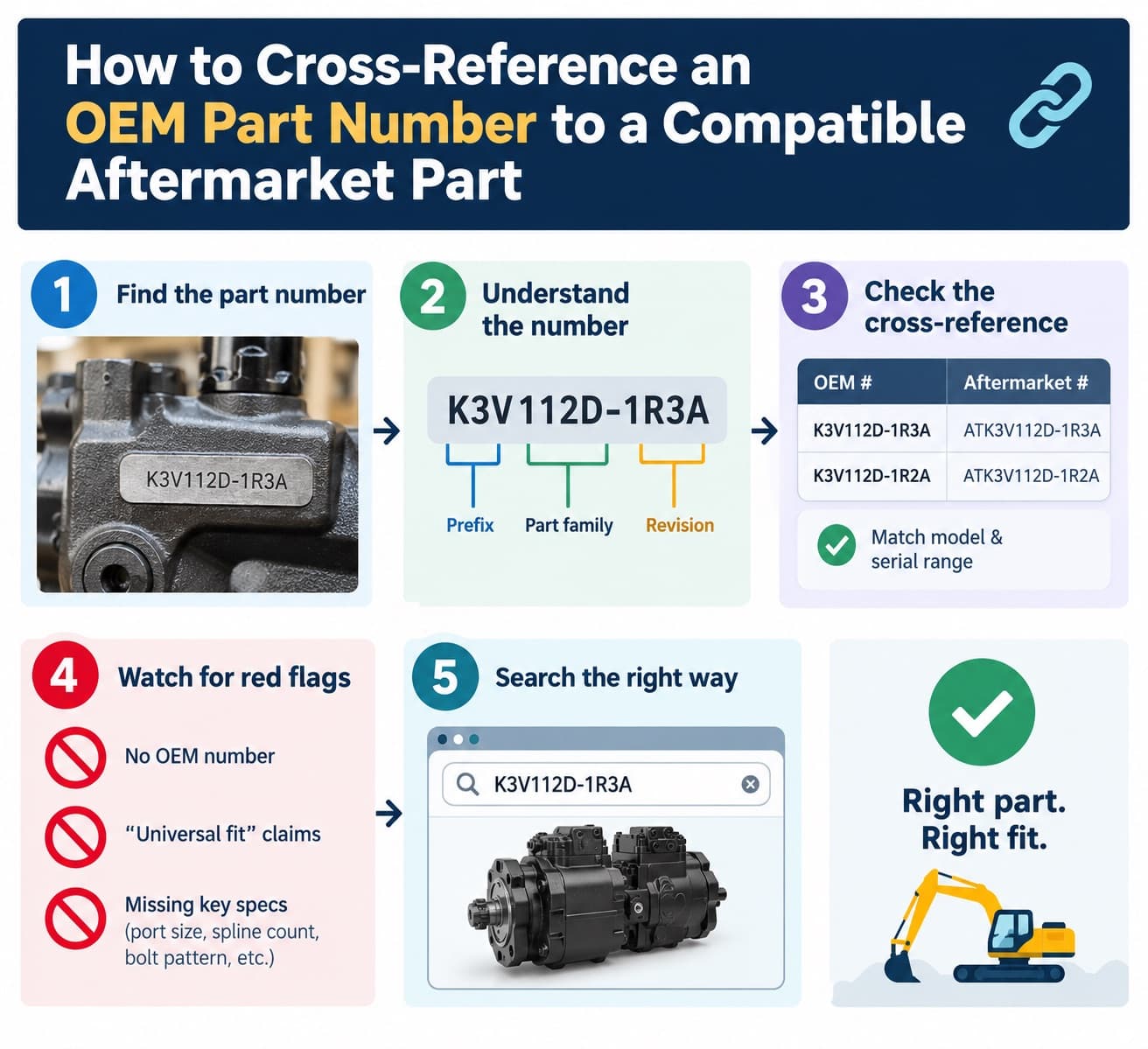
The machine's model name alone under-specifies the part you need, because specs commonly change mid-production run. The stamped or etched number on the physical part itself is the real identifier — see our guide on where to find that number on your excavator if you haven't located it yet.
What the number actually encodes
An OEM part number is typically a manufacturer prefix plus a part-family code, often followed by a revision suffix. That suffix matters more than it looks — a trailing letter or digit frequently marks a running design change, and a mismatched revision is one of the most common reasons a "correct" part turns out not to fit.
Cross-referencing to an aftermarket equivalent
A reputable aftermarket seller publishes an actual OEM-number cross-reference for the part — not just a description that sounds similar. A trustworthy fitment listing specifies the machine model and, ideally, a serial range, rather than a vague "fits excavators" claim that could apply to a dozen different configurations.
Red flags when cross-referencing
Be cautious of listings that show no OEM number at all, "universal fit" claims on parts that are inherently precision-fit, and descriptions that gloss over physical specs — port size, spline count, bolt pattern — that actually determine whether something fits.
Where to search
Search by the part's own number or name rather than just the machine model — it narrows results to the actual part, not everything tagged for that machine type.