Monsoon Maintenance for Earthmoving Machines in India
TL;DR
What actually fails on excavators, loaders, and backhoes during India's monsoon season, and the maintenance checklist that prevents it.
Why monsoon wear is different from normal wear
Monsoon conditions add failure modes that don't show up the rest of the year: water ingress into components that are normally just dusty, mud and silt packed into the undercarriage, humidity affecting electrical connections, and fuel or water separation issues from condensation and contaminated fuel sources on flooded sites.
Electrical and cab systems
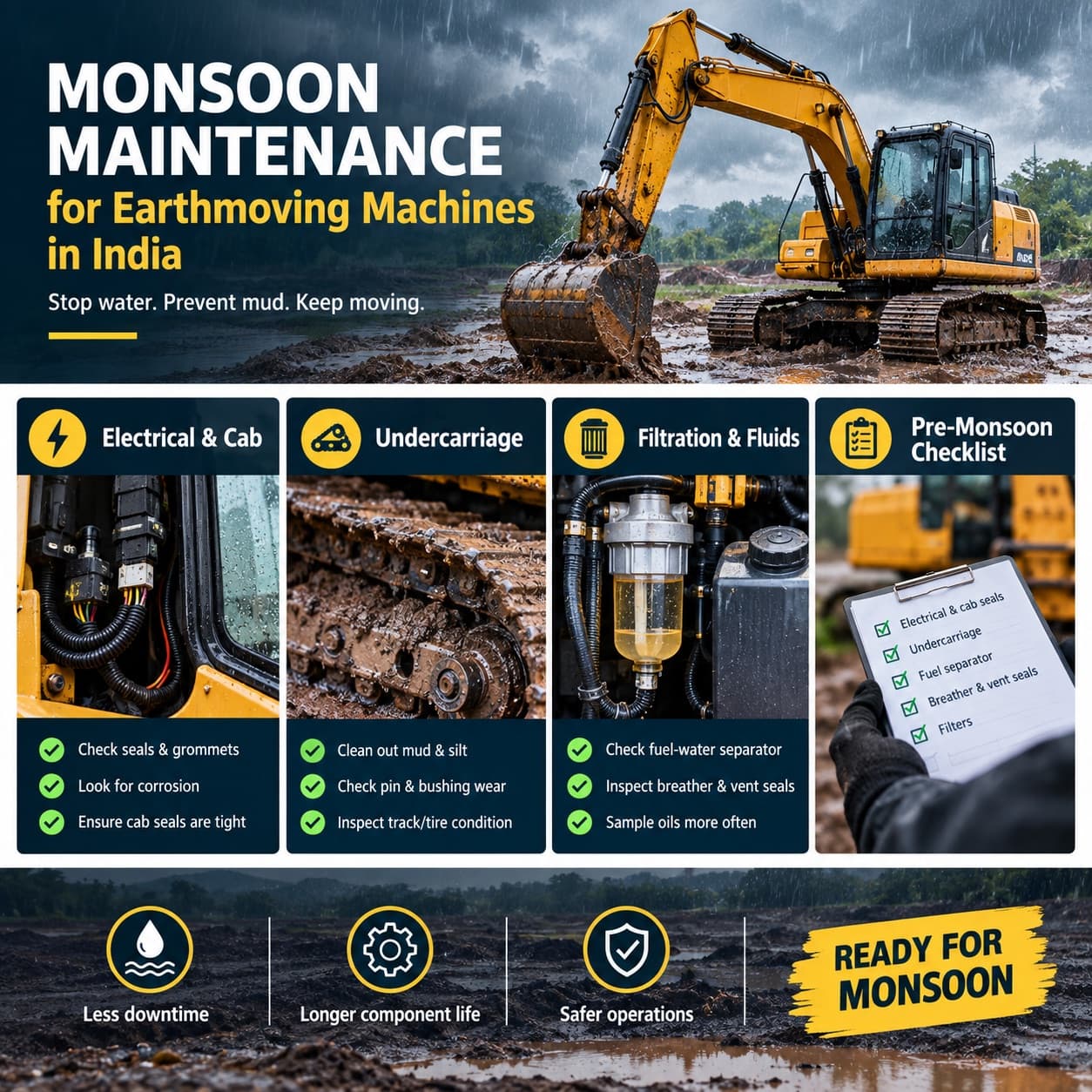
Check wiring harness seals and grommets, battery terminal corrosion, and cab door and window seals before the season starts. Water intrusion into control modules is one of the more common monsoon failure modes, and it's far cheaper to pre-empt with a seal check than to diagnose after the fact.
Undercarriage and ground-engaging parts
Mud and silt accelerate pin-and-bushing wear faster if the undercarriage isn't cleaned regularly during the season. Standing water combined with abrasive silt is often worse for track wear than dry abrasive ground, precisely because the mud works its way into joints and stays there.
Filtration and fluids
Check the fuel-water separator more frequently during monsoon operation, and inspect breather and vent seals so water isn't drawn into the hydraulic tank through a compromised seal. Machines working in flooded or waterlogged sites benefit from more frequent oil sampling during this period, not just the standard interval.
Pre-monsoon checklist
Before the season starts: inspect and reseal wiring and cab seals, clean and inspect the undercarriage, check the fuel-water separator and hydraulic tank breather, and confirm filters are fresh going in rather than due partway through the season.
Related